
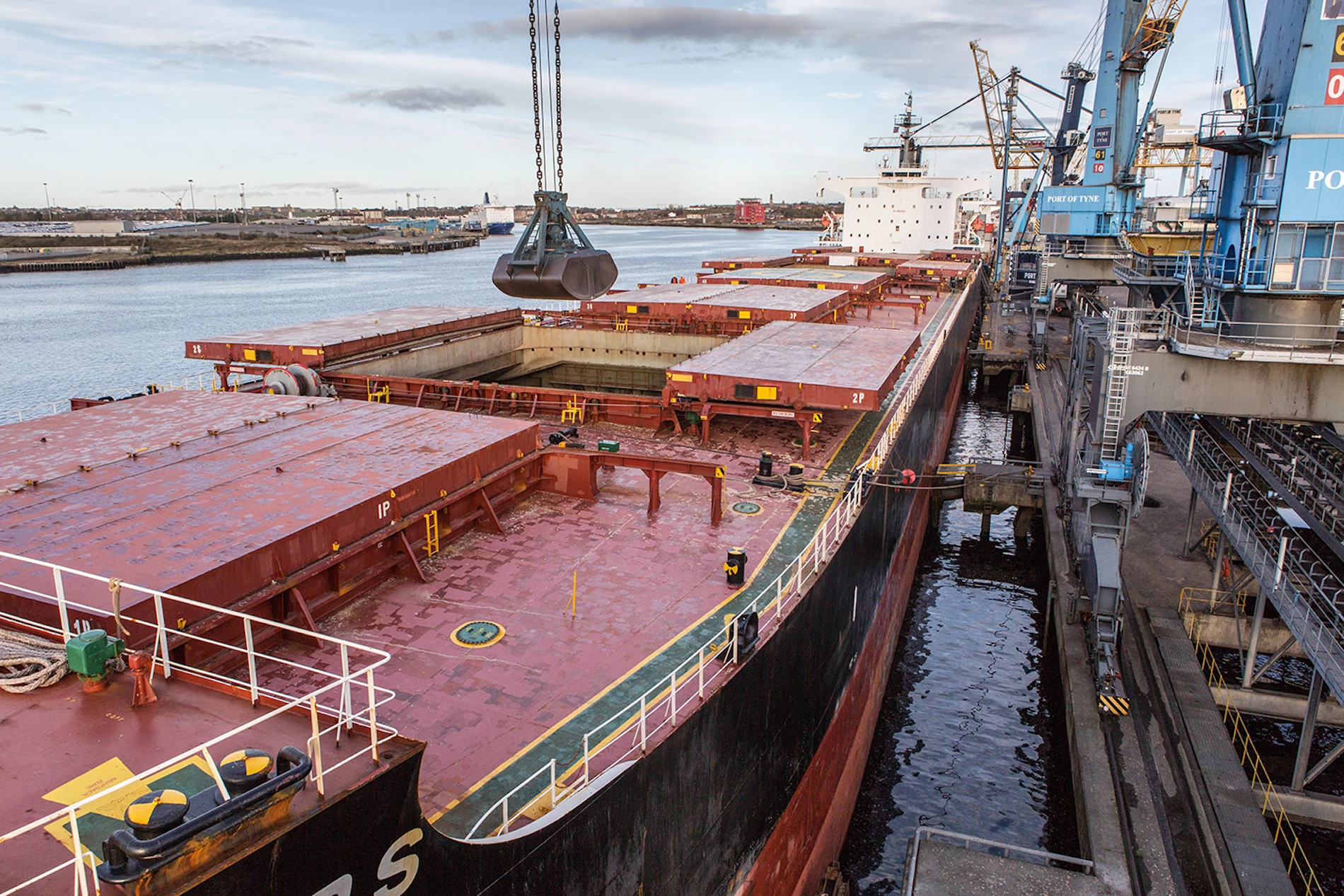
Port of Tyne sees huge wood-pellet shipment set new record
A record has been set for the biggest cargo of wood-pellets ever handled at Port of Tyne.
Docking at the Port of Tyne, the bulk cargo vessel St Dimitrios has sailed straight into the record books for discharging a total of 62,000 tonnes of wood-pellets.
The wood-pellets will be unloaded over a five day operation – which will then be transported to Drax Power station in North Yorkshire.
The 229m long vessel has sailed almost 8,846 nautical miles over 44 days from Vancouver, Canada, with its cargo of wood-pellets which is now replacing coal as a fuel in power stations to provide electricity for the National Grid.
Steven Harrison, Port of Tyne chief operating officer, said: “The Port of Tyne has been pioneering handling of this type of cargo since 2010 - our skilled operation enables a cargo of this size to be discharged in only five days and stored in a purposely designed on-site storage facility.
“Our rail terminal then takes the pellets directly to the power station eliminating road miles and increasing efficiency.”
Since 2010 the Port of Tyne has handled almost seven million tonnes of environmentally sustainable wood-pellets.
Want your business, product or service to be seen regionally and nationally? Bdaily helps you get your story in front of the right audience, every day. Find out how Bdaily can help →
Join more than 55,000 subscribers by signing up to our daily bulletin each morning here.
Enjoy the read? Get Bdaily delivered.
Sign up to receive our daily bulletin, sent to your inbox, for free.
Our Partners




 Can you really judge someone by their CV?
 Are you flying too close to business burnout?
 Making education a lot better for a lot more
 Have we made it harder for young people to succeed?
 Celebrating Nissan's North East success story
 Are you a meat proxy?
 Engaging the five-generation workplace
 Talent is an asset, not an operational resource
 Taking advantage of the opportunities ahead
 Accountability isn’t the enemy of empathy
 Act now to avoid a last-minute tax scramble
 How inner-city living can transform a city by the sea