
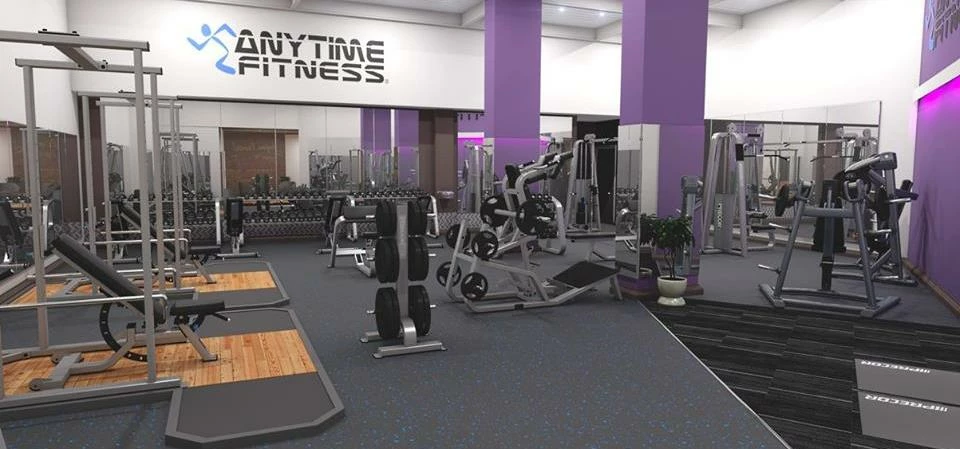
Global fitness brand announces plans for Macclesfield gym
A former nightclub in Macclesfield is set to become an 8,083 sq ft gym.
Anytime Fitness has signed a 15-year lease for a two-storey property at 16-20 Duke Street.
Anytime Fitness franchise holder David Hoyle said: “Duke Street is an ideal location for our new Macclesfield base, which will be the town’s first 24-hour gym.
“With local amenities on the doorstep as well as the train and bus station, the property is very accessible and convenient for both the local and wider community, and ideally positioned to capitalise on Macclesfield’s regeneration.”
Established 10 years ago, today Anytime Fitness operates an international network of almost 3,000 clubs across more than 23 countries.
Manchester-based property development and investment firm Property Alliance Group signed Anytime Fitness up to 16-20 Duke Street at an annual rent of £50k.
Alliance development surveyor Alex Thomas commented: “This building provides Anytime with a centrally located site, close to Churchill way which runs through the heart of Macclesfield.
“It also has the added benefit of being near to the proposed cinema and leisure complex, which will spearhead the town’s revitalisation plans.”
Want your business, product or service to be seen regionally and nationally? Bdaily helps you get your story in front of the right audience, every day. Find out how Bdaily can help →
Join more than 55,000 subscribers by signing up to our daily bulletin each morning here.
Our Partners




 Are you flying too close to business burnout?
 Making education a lot better for a lot more
 Have we made it harder for young people to succeed?
 Celebrating Nissan's North East success story
 Are you a meat proxy?
 Engaging the five-generation workplace
 Talent is an asset, not an operational resource
 Taking advantage of the opportunities ahead
 Accountability isn’t the enemy of empathy
 Act now to avoid a last-minute tax scramble
 How inner-city living can transform a city by the sea
 Artificial intelligence's value is the time it gives back