
Partner Article
Surgery For Children With 20 Billion Dollar Return
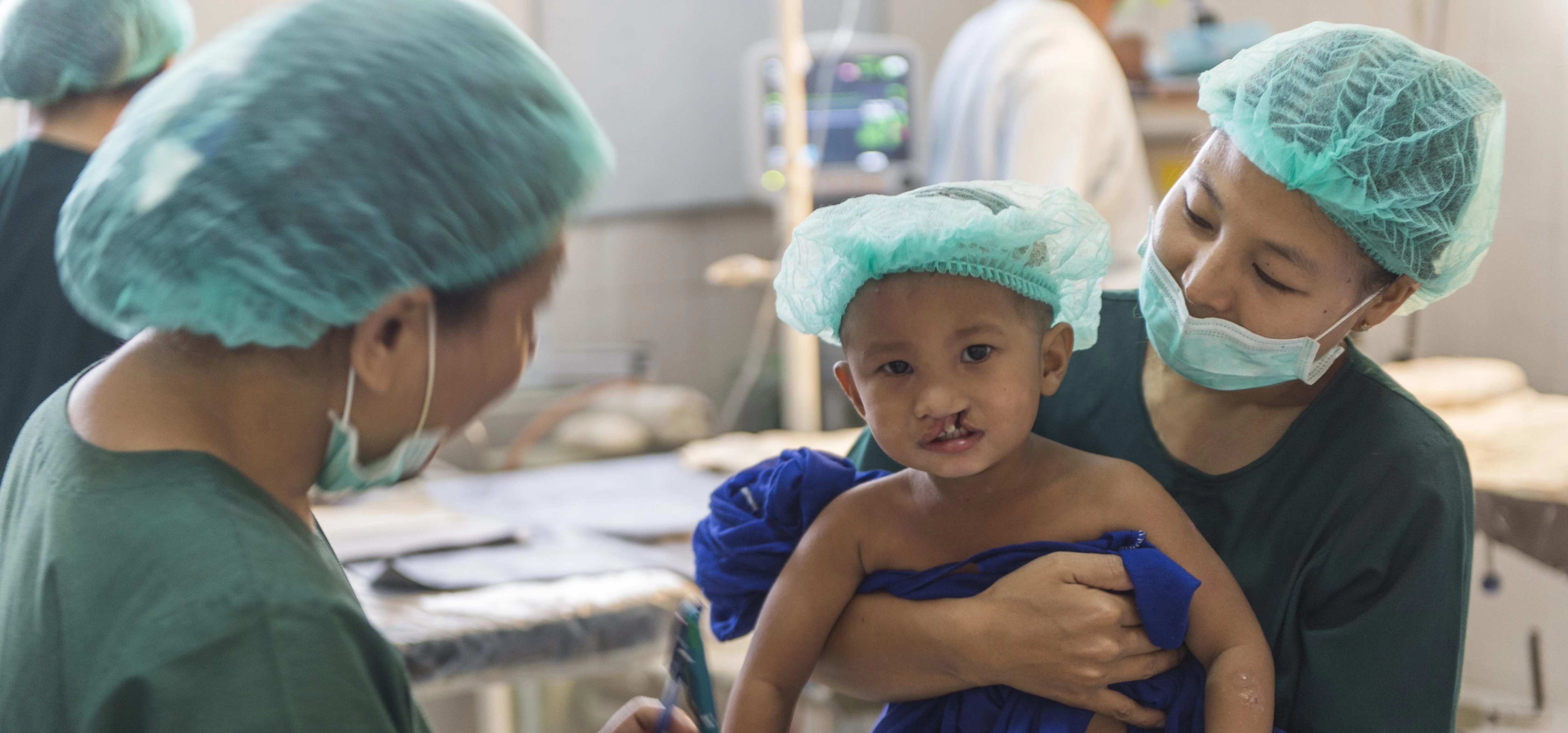
More than 170,000 children across the developing world are born with a cleft lip or a cleft palate each year.
The defects happen very early during pregnancy inside the womb. A cleft lip occurs when the upper lip does not fuse together properly during foetal development, leaving a gap on one or both sides of the mouth. A cleft palate is a hole or opening in the roof of the mouth, and occurs when the roof of the mouth (which is made up of both the hard and soft palate) does not fuse together properly.
Families in these developing areas often do not have access to quality healthcare services, or the resources to pay for treatment. Sadly, if left untreated, children will struggle with simple actions, such as eating, breathing and speaking, which can deny them of an education and other basic opportunities.
As well as limited medical resources, there is also a general lack of education surrounding cleft lip and palate, which can lead to negative stigmatisation surrounding those who are born with the condition. As a result, many struggle to find work later in life and frequently live isolated lives.
The British Medical Journal has recently published a new study, featuring data from Smile Train - an international children’s charity with a sustainable approach to solving cleft lip and palate. The study examines the economic and public health value of cleft lip and palate repairs in the developing world.
The study, titled ‘Economic valuation of the impact of a large surgical charity using the value of lost welfare approach’, analysed the long-term economic benefits of providing free cleft repair surgery to children in developing countries, and found that a single cleft repair (which can cost as little as $250) enhances individual earnings by up to $42,000 per patient - leading to a global economic boost of up to $20 billion.
The study proves that, enabling access to cleft repair surgery not only improves children’s lives in the short-term, but also ensures that they can live a happy, healthy life in the long-term, which in turn provides a massive economic boost to developing countries.
For more information about Smile Train, visit Smile Train’s website here: www.smiletrain.org.uk
For more information about the study, visit the British Medical Journal website here: gh.bmj.com/content/1/4/e000059
This was posted in Bdaily's Members' News section by George May .
Our Partners




 Resilience, connection and maximising opportunity
 In pursuit of healthy obsession
 Why the Budget must restore productivity
 What does collaboration really mean in business?
 Why NE6 is the real Northern Powerhouse
 Can you really judge someone by their CV?
 Are you flying too close to business burnout?
 Making education a lot better for a lot more
 Have we made it harder for young people to succeed?
 Celebrating Nissan's North East success story
 Are you a meat proxy?
 Engaging the five-generation workplace