
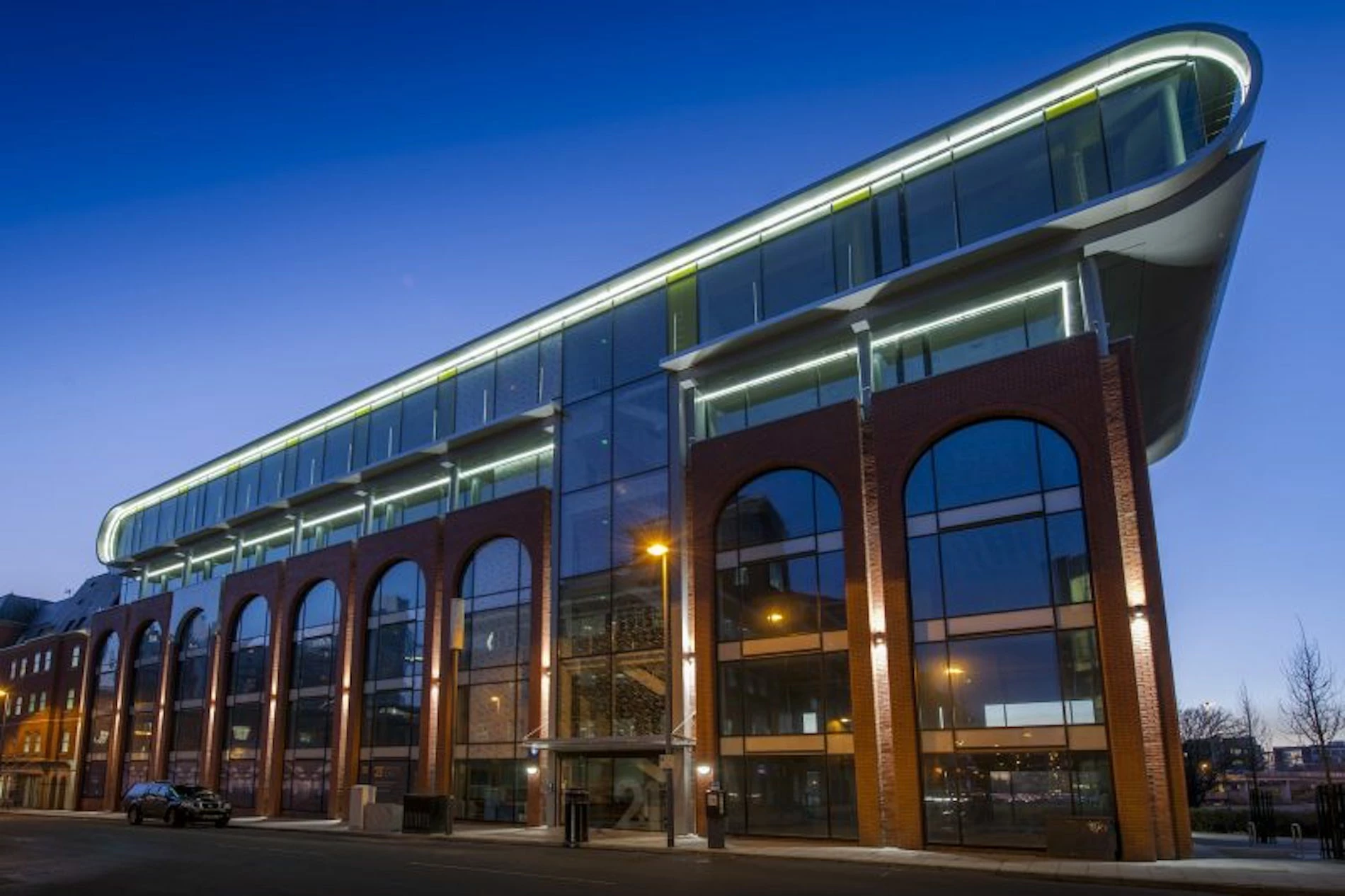
Market research agency makes move to 'prominent' Leeds city centre premises
ResearchBods, the market research agency, has agreed to let 21 Queen Street in Leeds.
ResearchBods, which was advised by Savills, has agreed a new 10 year lease on 4,391sq ft of space on the fourth floor of 21 Queen Street.
The letting follows Savills agreeing to sell the agency’s previous premises at Whitehall Waterfront.
Located in Leeds city centre, 21 Queen Street is a Grade A office building providing flexible workspace with features including shower facilities, secure bicycle parking and electric car charging points.
Savills sold ResearchBods’ previous headquarters at Suite G, Whitehall Waterfront on behalf of the agency to a private investor.
Paddy Carter, director in the office agency team at Savills Leeds, commented: “We are delighted to have advised ResearchBods on the sale of their former premises and to have secured them a new office in the prominent 21 Queen Street.
“This transaction demonstrates the breadth of our services and importance of local knowledge.”
CBRE advised Formal Investment Ltd on 21 Queen Street.
Want your business, product or service to be seen regionally and nationally? Bdaily helps you get your story in front of the right audience, every day. Find out how Bdaily can help →
Join more than 55,000 subscribers by signing up to our daily bulletin each morning here.
Enjoy the read? Get Bdaily delivered.
Sign up to receive our popular Yorkshire & The Humber morning email for free.
Our Partners




 Making education a lot better for a lot more
 Have we made it harder for young people to succeed?
 Celebrating Nissan's North East success story
 Are you a meat proxy?
 Engaging the five-generation workplace
 Talent is an asset, not an operational resource
 Taking advantage of the opportunities ahead
 Accountability isn’t the enemy of empathy
 Act now to avoid a last-minute tax scramble
 How inner-city living can transform a city by the sea
 Artificial intelligence's value is the time it gives back
 Why we must break the magnetic pull of London