
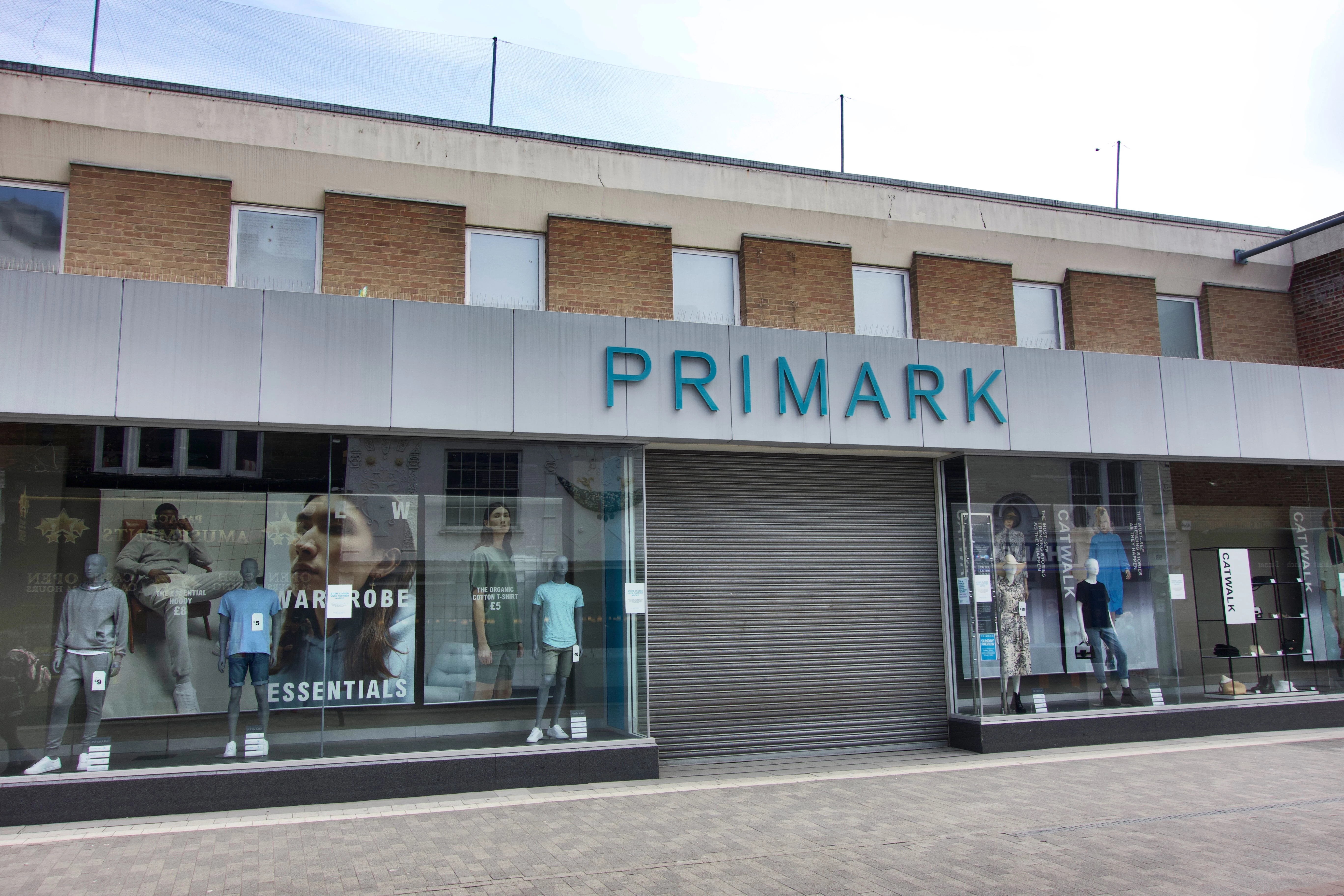
Primark set to see losses of more than £1bn as "uncertainty" rises
A UK fashion brand has reported that it is set to see losses of more than £1bn for the financial half year.
Primark, which is owned by Associated British Foods (ABF), said today that it had shifted its predictions for this half of the year from a £650m loss of sales to £1.05bn.
The losses are due to temporary store closures under coronavirus lockdown restrictions, with 76 per cent of the brand’s locations closed worldwide.
However, it said that it is saving 25 per cent on operating costs of closed stores, which it believes will “break even” its operating profit.
The company said that if stores remain closed until the end of March, it predicts that it will see a further £0.8bn of losses.
In today’s report, ABF said: “The uncertainty about store closure periods in the short term has increased.
“Making the assumption that all of the stores currently closed remain closed until the financial half year, at 27 February 2021, the loss of sales caused by temporary store closures would reach some £1.05bn.
“This is up from our previous estimate, based on announced closure dates, of £650m communicated on 31 December.
“Under the scenario that the entire estate is closed imminently, and remains closed until the end of March, we would expect to see over the three month period a further loss of Primark sales of some £0.8bn, and a consequent reduction in profit contribution of some £0.3bn.”
Want your business, product or service to be seen regionally and nationally? Bdaily helps you get your story in front of the right audience, every day. Find out how Bdaily can help →
Join more than 55,000 subscribers by signing up to our daily bulletin each morning here.
Enjoy the read? Get Bdaily delivered.
Sign up to receive our popular morning National email for free.
Our Partners




 Resilience, connection and maximising opportunity
 In pursuit of healthy obsession
 Why the Budget must restore productivity
 What does collaboration really mean in business?
 Why NE6 is the real Northern Powerhouse
 Can you really judge someone by their CV?
 Are you flying too close to business burnout?
 Making education a lot better for a lot more
 Have we made it harder for young people to succeed?
 Celebrating Nissan's North East success story
 Are you a meat proxy?
 Engaging the five-generation workplace