
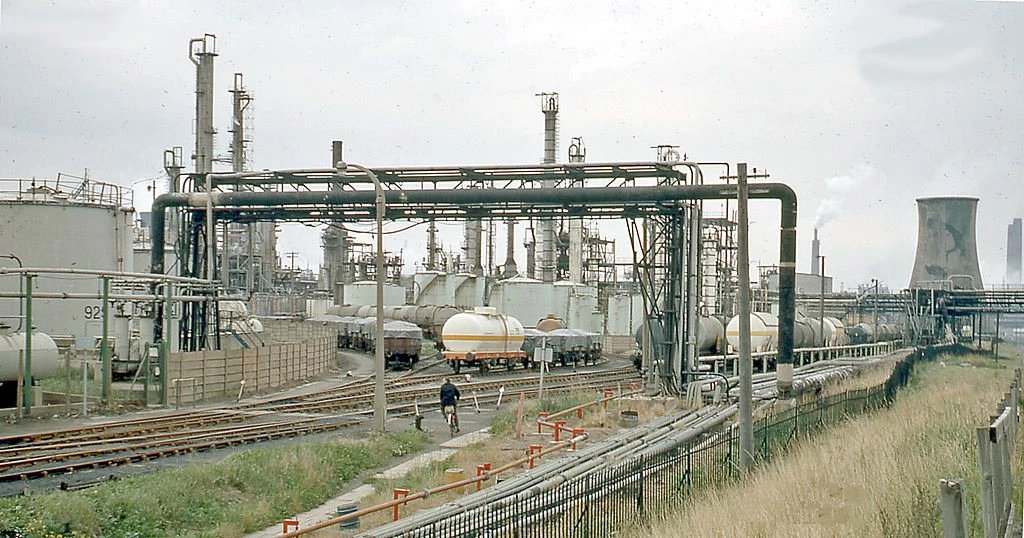
Billingham CO2 plant in talks for government backing as price rise halts production
The UK’s biggest supplier of CO2 is in talks for financial backing from the government after rising gas prices caused a halt in production.
CF Fertiliser, which has a plant in Billingham as well as Cheshire, had to close down production as gas prices rose, causing a disruption in the supply chain that the government has said will be noticeable to consumers in less than two weeks.
The company is a producer of carbon dioxide, which is used by suppliers of meat, poultry and fizzy drinks.
Kwasi Kwarteng, business secretary, has been in talks with CF Fertiliser’s CEO as he aims to get production back on track.
He commented: “Time is of the essence, and that’s why I spoke to the CEO, speaking to him twice in the last two days, and we’re hopeful that we can get something sorted today and get the production up and running in the next few days.
“It may come at some cost, we’re still hammering out details, we’re still looking at a plan.
“I have to say if there is support provided, that will be on a temporary basis, that’s not something that we want to do indefinitely.”
Want your business, product or service to be seen regionally and nationally? Bdaily helps you get your story in front of the right audience, every day. Find out how Bdaily can help →
Join more than 55,000 subscribers by signing up to our daily bulletin each morning here.
Enjoy the read? Get Bdaily delivered.
Sign up to receive our daily bulletin, sent to your inbox, for free.
Our Partners




 Can you really judge someone by their CV?
 Are you flying too close to business burnout?
 Making education a lot better for a lot more
 Have we made it harder for young people to succeed?
 Celebrating Nissan's North East success story
 Are you a meat proxy?
 Engaging the five-generation workplace
 Talent is an asset, not an operational resource
 Taking advantage of the opportunities ahead
 Accountability isn’t the enemy of empathy
 Act now to avoid a last-minute tax scramble
 How inner-city living can transform a city by the sea