
Partner Article
Lancaster expert gives advice on gender diversity
A Lancaster University professor has given evidence as part of an investigation into increasing the proportion of women on company boards.
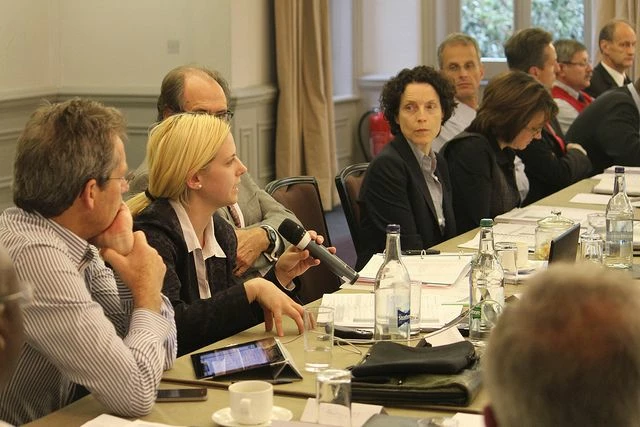
Sociology professor Sylvia Walby OBE was invited to the House of Lords Select Committee on the EU Internal Market, Infrastructure and Employment as part of the inquiry into the promotion of gender diversity in EU legislation.
In 2010, 3% of presidents of the largest companies in the EU were women and 12% were board members. In 2011, a report compiled by Lord Davies suggested a greater presence of women on corporate boards was associated with better economic performance in these companies.
The European Commission is looking to increase the proportion of women on company boards by 40% by 2020.
Professor Walby, who is also the UNESCO chair in Gender Research, was one of several experts questioned by the committee regarding the best way to improve gender balance on boards of directors. Questions included whether the EU should introduce legislative quotas to achieve gender balance.
She said: “The only policy intervention that has increased the proportion of women on corporate management boards to 40% has been that of legally binding quotas. The evidence is that while the use of voluntary regimes has led to some increase in the proportion of women on corporate boards, the effects are significantly smaller and slower.
“In the context of the poor decision-making by the largely male boards of finance companies that has been so damaging to the rest of the economy, it is unsurprising that the public is demanding an improvement in the quality of these boards.”
The UK government is hoping that a voluntary approach from businesses would lead to a 25% more women taking up board positions by 2015.
The Lord Davies report recommened that the UK companies listed in the FTSE 100 should be aiming for a minimum of 255 female board member representation by 2015. The report also advised that companies should concentrate on setting their own targets for 2013 and 2015 which will make sure that more talented women can get involved with the top jobs in countries across the UK.
This was posted in Bdaily's Members' News section by Francesca Dent .
Our Partners




 Are you flying too close to business burnout?
 Making education a lot better for a lot more
 Have we made it harder for young people to succeed?
 Celebrating Nissan's North East success story
 Are you a meat proxy?
 Engaging the five-generation workplace
 Talent is an asset, not an operational resource
 Taking advantage of the opportunities ahead
 Accountability isn’t the enemy of empathy
 Act now to avoid a last-minute tax scramble
 How inner-city living can transform a city by the sea
 Artificial intelligence's value is the time it gives back