
Partner Article
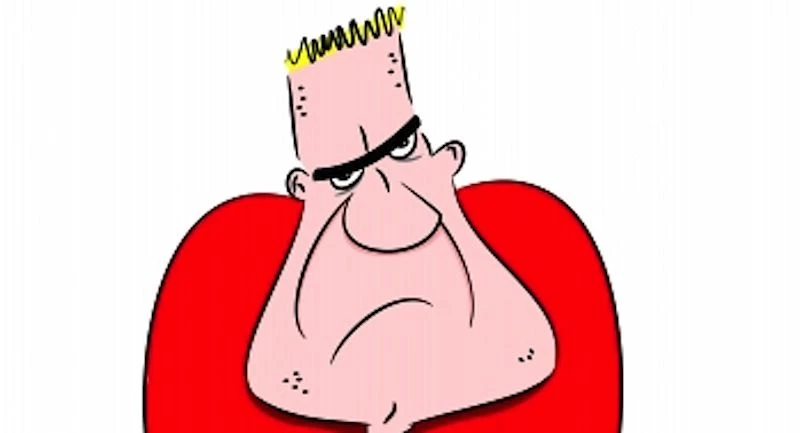
Is HMRC guilty of using bully-boy tactics?
Last week we commented on HMRC’s perceived “tax bashing” attack on Middle England. More tangible evidence of this has now emerged in the form of a quite extraordinary campaign under which HMRC is writing to numerous taxpayers who pay tax at a lower rate than the taxman expects.
Rather than check tax returns to see why the “effective rate of tax” is less than anticipated, HMRC seems to have simply issued a string of blanket letters to unsuspecting – and now worried and confused – customers asking them to check that their Self-Assessment returns are in order.
Examples we have seen include an elderly widow who pays more than half of her income to charity thus attracting relief under the Gift Aid regime, an individual who sold his home but declared (with full explanation on the face of his tax return) part of the capital gain as not qualifying for the main residence exemption, and a trader whose business incurred a loss which is clearly tax relievable.
In each case, a quick check of the tax return would have shown HMRC why the effective rate was lower than the general percentage (whatever that is) which HMRC expected it to be. To rub salt in the wounds of the recipients of these inappropriate letters, HMRC arrogantly conclude with a paragraph which reads “Paying the right amount of tax is important as it helps to pay for the public services that we all rely on. Not paying the right amount of tax has serious consequences for these services.”
HMRC will no doubt claim that campaigns such as this help to encourage tax dodgers to come forward and own up to irregularities. Whilst this may indeed be true in a minority of cases, it cannot be right that HMRC is using such “scare tactics” by bothering a whole tranche of innocent taxpayers who have fully met all their obligations by doing exactly what HMRC requires by completing their tax returns correctly.
Surely the public at large has a right to expect HMRC to have at least carried out some basic checks on the information it holds before issuing such “bully-boy” standard letters? Campaigns such as this do nothing to encourage the honest taxpayer to engage constructively with HMRC and arguably may well damage the future “customer” relationship. We call on HMRC to think again before casually issuing spurious and scattergun letters to whoever their computer identifies as a possible risk.
This was posted in Bdaily's Members' News section by George Bull .
Enjoy the read? Get Bdaily delivered.
Sign up to receive our popular morning National email for free.
Our Partners




 Are you flying too close to business burnout?
 Making education a lot better for a lot more
 Have we made it harder for young people to succeed?
 Celebrating Nissan's North East success story
 Are you a meat proxy?
 Engaging the five-generation workplace
 Talent is an asset, not an operational resource
 Taking advantage of the opportunities ahead
 Accountability isn’t the enemy of empathy
 Act now to avoid a last-minute tax scramble
 How inner-city living can transform a city by the sea
 Artificial intelligence's value is the time it gives back