
Partner Article
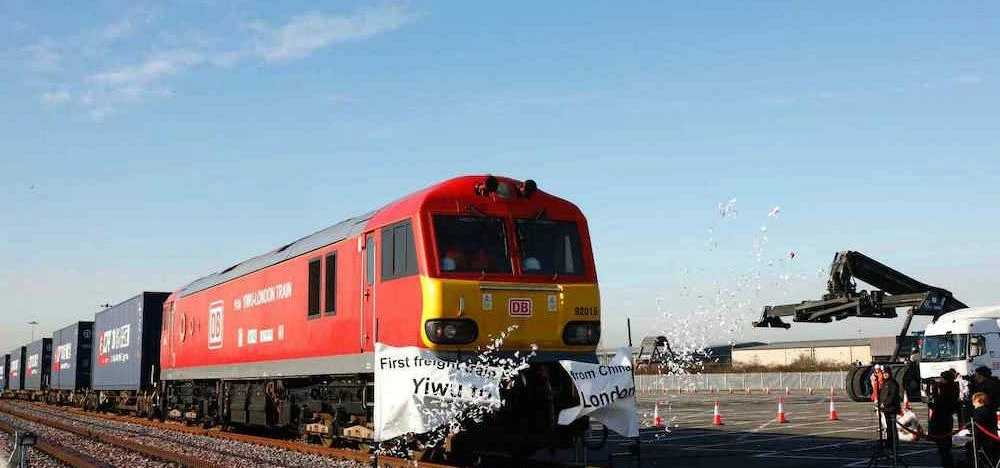
First transcontinental freight train from China arrives in the capital
The first container train travelling between China and the UK has christened the new transcontinental route after arriving at DB Cargo’s terminal in Barking.
The new 12,000km route, which has been dubbed as the new Silk Road, stretches from Yiwu in the eastern Chinese province of Zhejiang, all the way to London as part of a major China-Europe rail link.
Taking 18 days to reach its destination, the rail link offers a freight route that is twice as fast as transporting cargo by sea, and includes stop offs at Duisburg, Madrid, Afghanistan and Riga.
The first test train was loaded with textiles and consumer goods and had its 34’ x 40’ containers, which are designed specifically for transport through the Channel Tunnel, were loaded during a stop at Duisburg container terminal.
Cargo changes are required numerous times along the route due to changes in track gauge across the route as the train threads its way across borders and continents.
Cargo volume along the ‘Silk Road’ route is expected to swell to around 100,000 containers by 2020, owed in part due to the addition of the new London stop.
Want your business, product or service to be seen regionally and nationally? Bdaily helps you get your story in front of the right audience, every day. Find out how Bdaily can help →
Join more than 55,000 subscribers by signing up to our daily bulletin each morning here.
Enjoy the read? Get Bdaily delivered.
Sign up to receive our popular morning London email for free.
Our Partners




 What does collaboration really mean in business?
 Why NE6 is the real Northern Powerhouse
 Can you really judge someone by their CV?
 Are you flying too close to business burnout?
 Making education a lot better for a lot more
 Have we made it harder for young people to succeed?
 Celebrating Nissan's North East success story
 Are you a meat proxy?
 Engaging the five-generation workplace
 Talent is an asset, not an operational resource
 Taking advantage of the opportunities ahead
 Accountability isn’t the enemy of empathy