
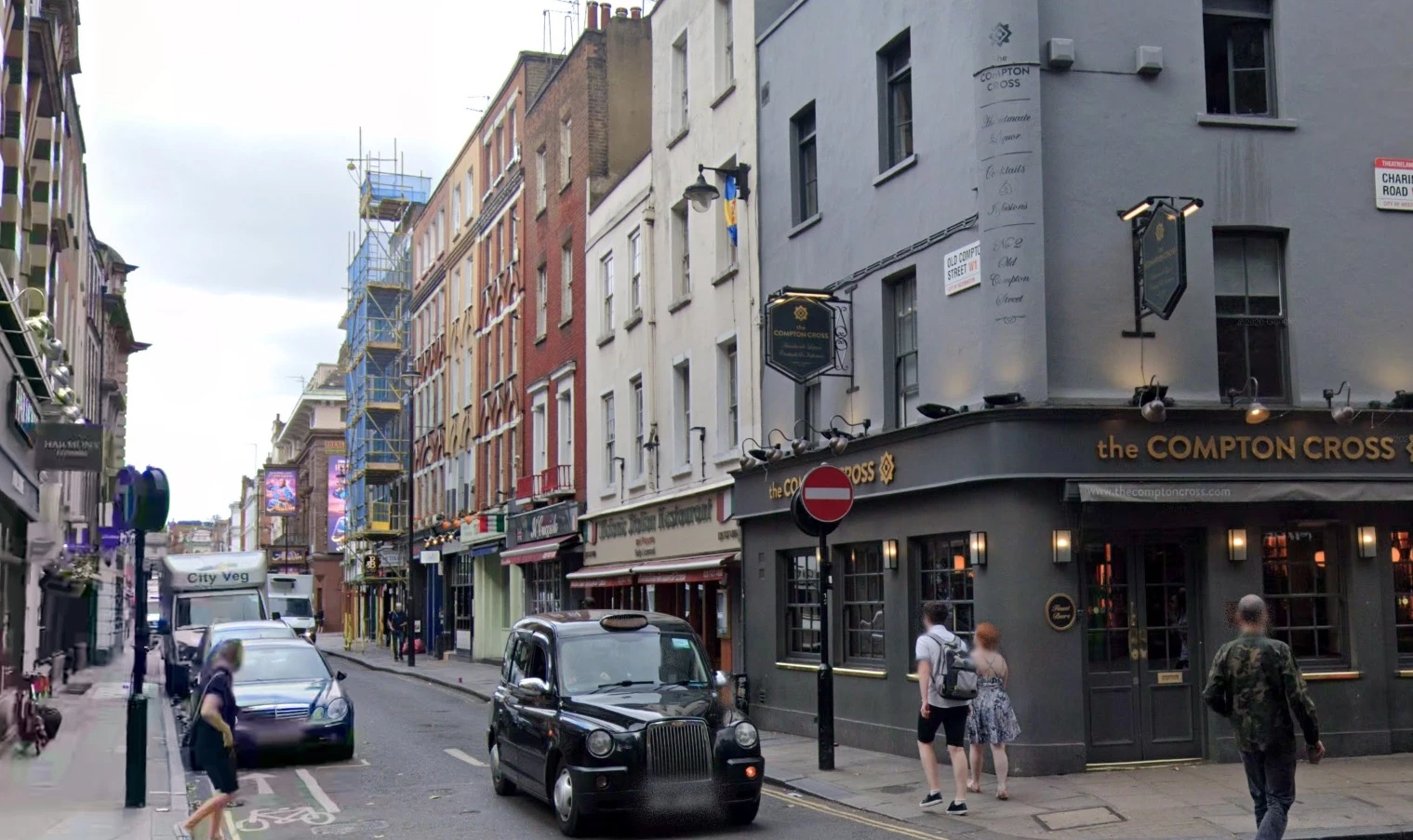
18th century site of former Soho “institution” brought to market
A historic building in London’s West End has been brought to market for the first time in three decades.
Leisure property agency Shelley Sandzer has announced that it has brought 4-6 Old Compton Street to market.
Located on Old Compton Street close to its junction with Charing Cross Road, the site is in the heart of Soho and was formerly occupied by Melanie Italian restaurant.
The Grade II listed building, which dates back to the 18th century, comprises 1,817 sq ft of restaurant space across its ground floor and basement, with three upper floors containing seven apartments.
Nick Weir, co-managing director at Shelley Sandzer, commented: “This site has real history – bringing it to market for the first time in three decades is an exciting prospect at a crucial time for our industry.
“We are looking for an operator that can really complement the existing restaurants, cafés, and theatres, attracting its own crowd while also able to pick up on the natural footfall this area generates given its position in the heart of Soho.”
Want your business, product or service to be seen regionally and nationally? Bdaily helps you get your story in front of the right audience, every day. Find out how Bdaily can help →
Join more than 55,000 subscribers by signing up to our daily bulletin each morning here.
Enjoy the read? Get Bdaily delivered.
Sign up to receive our popular morning London email for free.
Our Partners




 Making education a lot better for a lot more
 Have we made it harder for young people to succeed?
 Celebrating Nissan's North East success story
 Are you a meat proxy?
 Engaging the five-generation workplace
 Talent is an asset, not an operational resource
 Taking advantage of the opportunities ahead
 Accountability isn’t the enemy of empathy
 Act now to avoid a last-minute tax scramble
 How inner-city living can transform a city by the sea
 Artificial intelligence's value is the time it gives back
 Why we must break the magnetic pull of London