
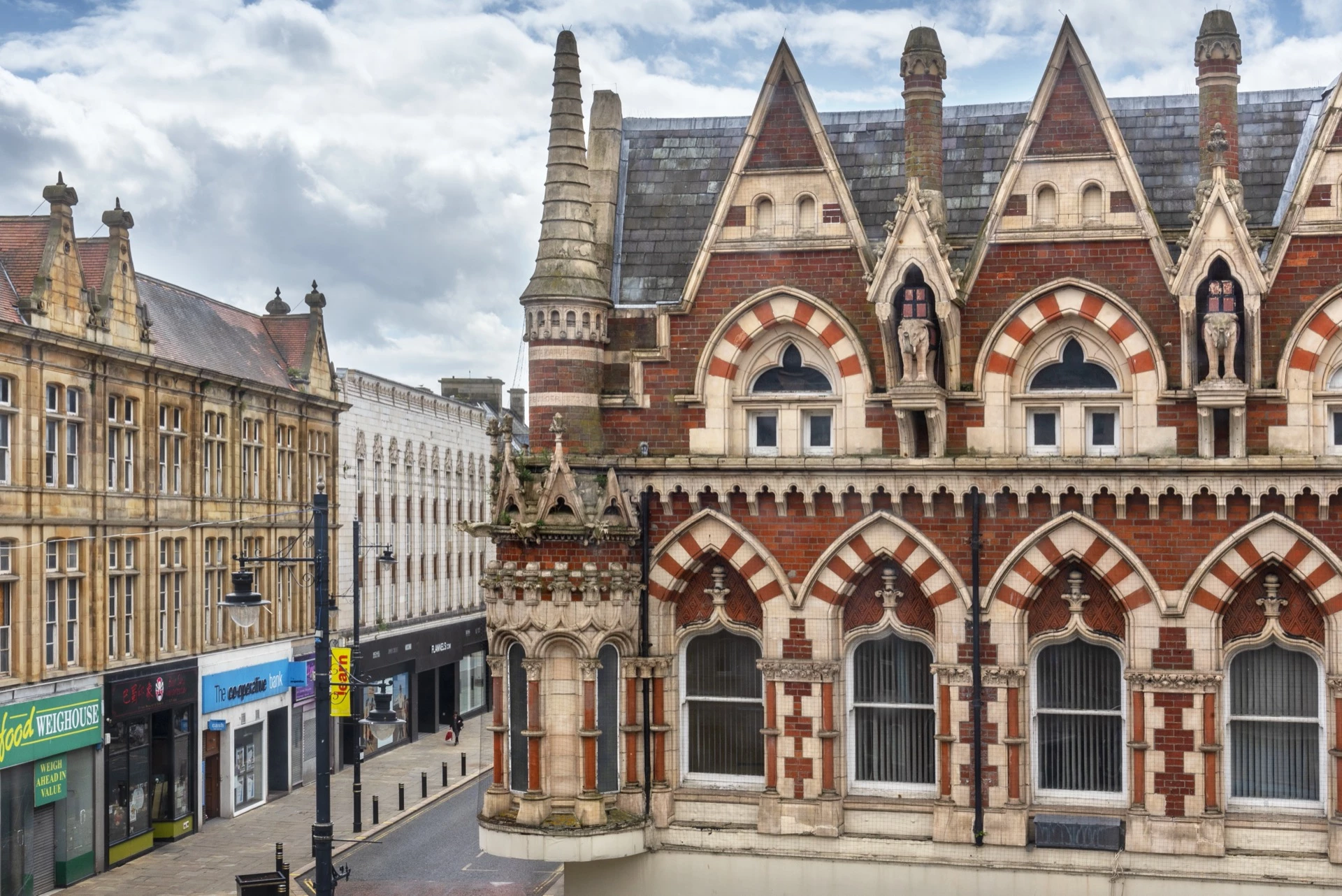
"Historic” Sunderland landmark set to open to the public amid restoration works
Restoration works to transform a historic Sunderland landmark have gathered pace and members of the public are being offered the chance to see work in progress.
The Grade II listed Elephant Tea Rooms is undergoing external repair and enhancement works designed by Mosedale Gillatt Architects Ltd, including “striking” new shop fronts and the reinstatement of lost decoration and features.
To give members of the public further opportunities to explore the history of part of Sunderland’s high street, as well as learn more about and participate in the specialist repair techniques used in the restoration of the famous Elephant Tea Rooms, a series of hard hat tours and terracotta masterclasses will take place on February 15 and 16, and March 8.
Organised as part of Sunderland’s Heritage Action Zone (HAZ) heritage skills programme and facilitated by local contractor, NCS Ltd, and Sunderland stonemasons, Mason and Forster Ltd, booking for the tours and masterclasses is now open.
Attendees will get the chance to see the new Georgian style timber shop front, which is nearing completion, as well as the start of specialist restoration work to the building’s terracotta features, including the ornamental elephants and gargoyles.

Sean Anderson, managing director of NCS Ltd, commented: “We are delighted to be welcoming members of the public to a series of Hard Hat Tours, showcasing the intricate and carefully considered work being undertaken on this iconic building in Sunderland.”
Located at the corner of High Street West and Fawcett Street, the building is one of the architectural highlights of Sunderland and the transformation is expected to be complete by August this year.
Constructed at the height of Victorian wealth and investment in Sunderland and opened to the public in 1875 as a grocer’s shop and tea warehouse for Grimshaw & Son, the building has a distinctive Hindu Gothic style.
The external restoration project is being supported with a total of £720k funded by Sunderland City Council, Historic England and the Department for Levelling Up, Housing & Communities (DLUHC) through the Future High Street Fund and Heritage Action Zone (HAZ) projects.
Councillor Graeme Miller, leader of Sunderland City Council, added: “This is a fantastic opportunity for the public to see how traditional craft skills are being used to restore and protect a beautiful landmark in our city centre.”
By Matthew Neville – Senior Correspondent, Bdaily
- Add me on LinkedIn and Twitter to keep up to date
- And follow Bdaily on Facebook, Twitter and LinkedIn
- Submit press releases to editor@bdaily.co.uk for consideration.
Want your business, product or service to be seen regionally and nationally? Bdaily helps you get your story in front of the right audience, every day. Find out how Bdaily can help →
Join more than 55,000 subscribers by signing up to our daily bulletin each morning here.
Enjoy the read? Get Bdaily delivered.
Sign up to receive our daily bulletin, sent to your inbox, for free.
Our Partners







 Artificial intelligence's value is the time it gives back
 Why we must break the magnetic pull of London
 AI scepticism is healthy - inaction isn't
 What does NPPF mean for planning gain and pricing?
 What new NPPF rules mean for landowners
 The hidden cost squeezing Britain's economy
 Teesside deserves more than cashback devolution
 Construction must be built on commercial discipline
 Devolution needs financial firepower to drive growth
 The value of creating a stronger careers route
 Apprenticeships: Invest in talent or keep chasing it
 Are you ready for salary transparency?