
Partner Article
Old Methods: New Technology
With the International Maritime Organisation setting a target of reducing total greenhouse gasses, for international shipping by 30% before 2030, and pursuing a reduction of 70% by 2050 (both figures compared to 2008), vessel owners are striving to employ new methods to reduce their emissions.
Whilst a lot of focus is on simply using alternative fuels, such as Hydrogen, Methanol, Ammonia, Biofuel or LNG, some companies are looking to re-introduce centuries-old methodology, but utilising modern design and materials. One such method is the introduction of sails, or kites to their vessels, which have been proven to reduce emissions by over 20%.
There are several companies exploring this market, with a wide array of design concepts from sails attached to masts to kites attached to winches. One such company at the forefront of developing the latter of these concepts, is Airseas who have a system that has been extensively trialled on a vessel to prove its capabilities and efficiencies.
Having worked with a Japanese vessel operator trialling their prototype system during the past few years, Airseas are looking to enter into full production in 2024, when they are looking to produce approximately 20 systems.
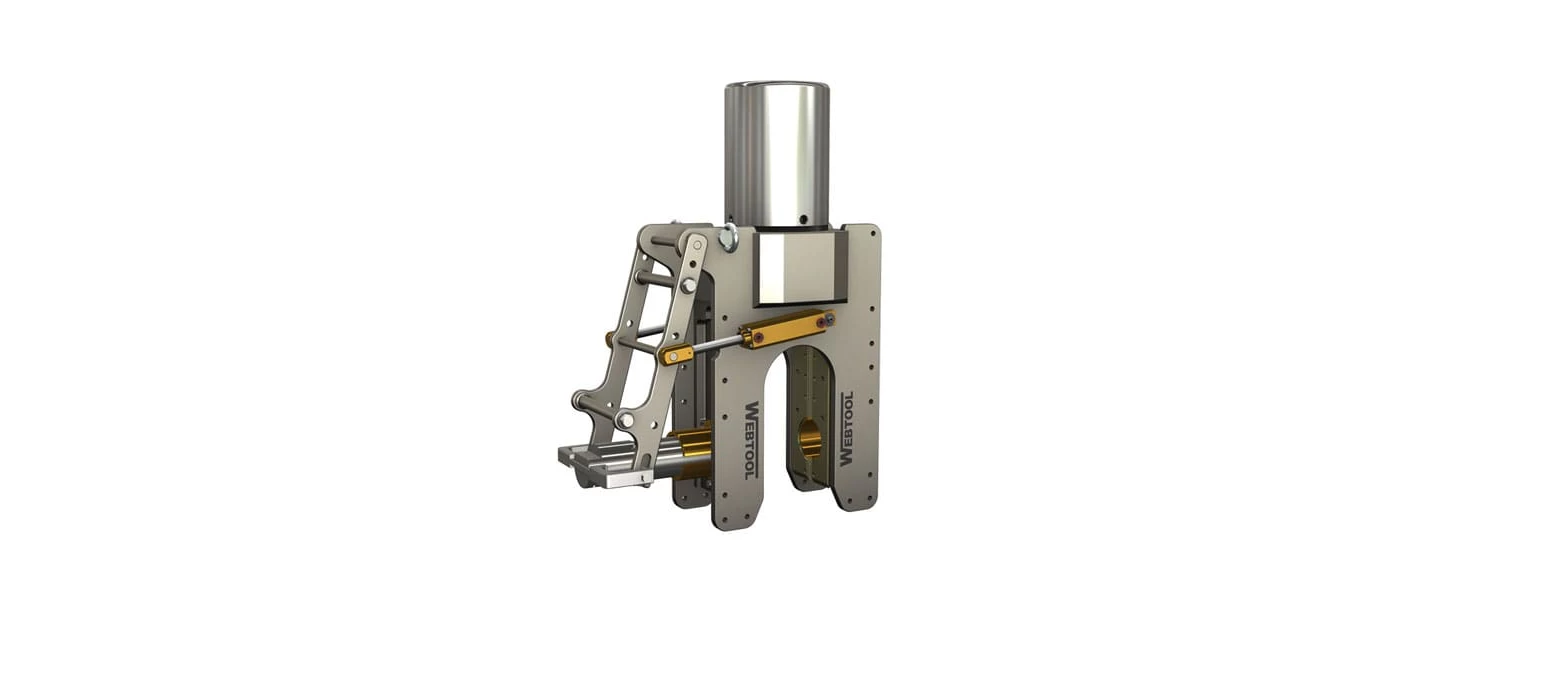
Allspeeds Limited designed and manufactured the Webtool cutters for the emergency disconnect system on the prototype, and three subsequent systems, to suit the customers requirements and worked closely with them, their system supplier and Bureau Veritas to ensure they met with all design and quality requirements.
Following completion of the first three prototype cutters, Bureau Veritas attended site for factory acceptance testing, and following successful completion were able to issue the necessary certification.
With the new targets introduced by the International Maritime Organisation, for reduction of greenhouse gasses, the potential growth in requirement during the next 5-10 years looks very good, which in turn will help just a little with the environmental issues caused by greenhouse gasses.
The Webtool cutters are positioned within the deck equipment, which consists of a mast, carts, winches and a storage area with the cutters placed with the winch line running through them, so that if there are any issues such as entanglement, the line can be cut immediately via a control system operated from the bridge.
The cart system releases the wing from its storage area before being inflated at the top of the mast for take-off.
This is just one example of where companies are looking to re-imagine traditional forms of propelling vessels in the fight against global warming.
This was posted in Bdaily's Members' News section by Weblinx .
Our Partners







 Taking advantage of the opportunities ahead
 Accountability isn’t the enemy of empathy
 Act now to avoid a last-minute tax scramble
 How inner-city living can transform a city by the sea
 Artificial intelligence's value is the time it gives back
 Why we must break the magnetic pull of London
 AI scepticism is healthy - inaction isn't
 What does NPPF mean for planning gain and pricing?
 What new NPPF rules mean for landowners
 The hidden cost squeezing Britain's economy
 Teesside deserves more than cashback devolution
 Construction must be built on commercial discipline