

‘Driverless’ public transport under consideration amid Northumberland development
Innovate UK has awarded £160k for a study to determine the feasibility of an autonomous, ‘driverless’ public transport system between Seaton Delaval Station and the Northumbria Specialist Emergency Care Hospital (NSECH) in Cramlington.
The initiative, led by developer Dysart, in collaboration with Newcastle University, Milestone Transport Planning, Dromos, and Pegasus Group holds the promise of providing an accessible, low-carbon solution to bridge the connectivity gap between these crucial public infrastructure assets.
The feasibility study is set to examine the potential of introducing a zero-emission Connected Autonomous Mobility (CAM) system to establish a public transport link between Seaton Delaval Station on the soon to be reinstated Northumberland Line and the Northumbria Specialist Emergency Care Hospital (NSECH) in Cramlington.
The proposed Northumberland Line, a significant passenger rail project, will connect rural areas of Northumberland to the county’s main towns and urban centres in Newcastle and North Tyneside and is due to open in the summer of 2024.
NSECH is England’s first purpose-built specialist emergency care hospital, with emergency consultants on site 24 hours a day, seven days a week, as well as consultants in a range of specialities offering ‘world-class’ care for critically ill and injured patients.
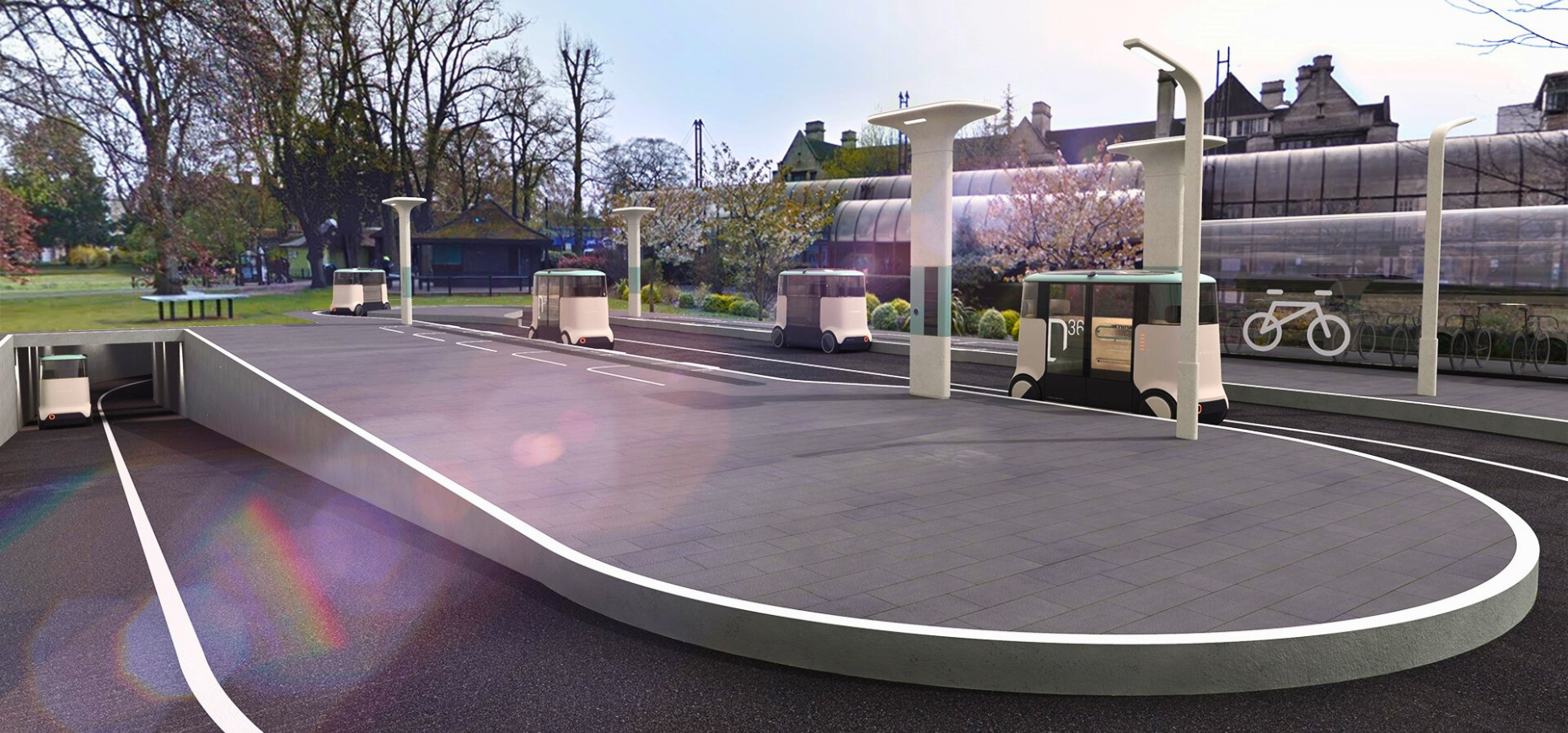
The development of a new station at Seaton Delaval could offer improved connectivity to the Hospital by public transport: as it stands, the new rail station does not propose any direct link to NSECH so the opportunity to consider some innovative future mobility solutions is timely.
Mike Clark, Development Director at Dysart, commented on the project: “This feasibility study has the potential to deliver world-first technology right on our doorsteps here in Cramlington. The autonomous proposal is a 21st century solution to a transport challenge which is efficient and environmentally sound.
“There is a whole package of opportunity around Cramlington and NSECH which has the potential to deliver real and sustained benefit to the whole community.”
Newcastle University, leveraging its experience in delivering and evaluating CAM schemes, such as the Sunderland Advanced Mobility Shuttle (SAMS) and the Vantec Connected Automatic Logistics (VCAL) projects that were funded by Innovate UK earlier this year.
The University will assess user-centric requirements such as service delivery, willingness to use and willingness to pay, carbon emissions, as well as accessibility to ensure the project’s success as a sustainable and user-friendly public transport solution for the hospital, its staff, patients, and visitors.
By Matthew Neville – Senior Correspondent, Bdaily
- Add me on LinkedIn and Twitter to keep up to date
- And follow Bdaily on Facebook, Twitter and LinkedIn
- Submit press releases to editor@bdaily.co.uk for consideration.
Want your business, product or service to be seen regionally and nationally? Bdaily helps you get your story in front of the right audience, every day. Find out how Bdaily can help →
Join more than 55,000 subscribers by signing up to our daily bulletin each morning here.
Enjoy the read? Get Bdaily delivered.
Sign up to receive our daily bulletin, sent to your inbox, for free.
Our Partners




 Resilience, connection and maximising opportunity
 In pursuit of healthy obsession
 Why the Budget must restore productivity
 What does collaboration really mean in business?
 Why NE6 is the real Northern Powerhouse
 Can you really judge someone by their CV?
 Are you flying too close to business burnout?
 Making education a lot better for a lot more
 Have we made it harder for young people to succeed?
 Celebrating Nissan's North East success story
 Are you a meat proxy?
 Engaging the five-generation workplace